My Manifesto (or, It’s Not You, It’s Me)

No longer will I wear the disguise! No longer will I pretend to be cool or impervious or like everyone else! No longer will I call myself vile names for being weak in body or mind! No longer!

Instead, I will embroider a flag and wave it high. My flag will say:

  • I’m acrophobic and I won’t follow you up that climb with the sheer drop-offs on one or both sides.
  • I wither in the heat and I won’t be joining you for afternoon anything in high summer. In fact, I tend toward Seasonal Affective Disorder in the summer months anyway, so you might as well just leave me out of it.
  • I could drink the beer, wine, or cocktail you offer, but I would probably get a splitting headache shortly thereafter, not sleep well, and feel like crap tomorrow and I want to do things tomorrow. So, sorry but no.
  • I don’t know if I have social anxiety or I’m an introvert or I’m shy or what, but I cannot carry on small talk for very long, especially in crowded or noisy places. It’s not about you, but I’ll be out of there thank you very much.
  • At the end of a long day — or pretty much any day — I need to shut down all the stimulus. I need to be not talked to, not observed, not teased. Just for a while, or maybe for a long time. It’s not you, really, it’s me.
  • I go to bed early. That’s all.
  • I can’t sit in a chair very long. It cramps my body and makes me squirm inside and out. So I might lie on the floor or walk around while we talk. If I can’t do those things, I might leave soon. Same if it’s too hot or stuffy or cluttered. Not because of you, because of me.
  • I don’t enjoy music festivals. Or parties. Or large group dinners. Or receptions. Or airplane seatmates who talk. I just don’t.
  • When I get uncomfortable (from any of the above or anything else), it overtakes me hard and fast and I need to make a change. Quick. It could seem rude, but it’s not you, it’s me.
  • If I seem like a pain in the ass, imagine being me.

*Nothing in this manifesto should be construed to contradict that I love a good laugh, I love my friends deeply and forever, I am mostly brave and strong and often playful, I am multi-faceted, and I do my best. For further reading, consult hsp.com and Meyers Briggs and the Cambridge dictionary.

I’m going to need a big flag.

In my estivation…..

Estivation: prolonged torpor or dormancy of an animal during a hot or dry period.

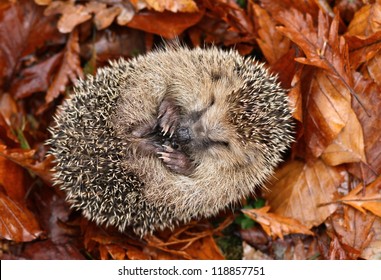
I’m one of these strange creatures whose lowest point of the year is high summer. Yet it turns out I’m not that strange after all! I’m just an estivator, like my cousins the snails and hedgehogs and tortoises and lemurs!

It’s not just the hot part of a given summer day when I enter a torpor. It starts right ahead of the summer solstice and lasts into the early part of September. Even on relatively cool summer days, or during the lovely mountain summer mornings and evenings, each of my attendant parts — physical, mental, emotional — is draggy and slow and heavy. Motivation is a distant memory.

Summer is supposed to be the season of growth and expansion. Outdoor sports and long, busy, social days. I try. I drag my estivating carcass through camping trips and barbecues and outdoor festivities. But mostly I want to follow my friends’ examples:

  • When it gets above 86 degrees, hedgehogs estivate by lowering their metabolism, curling up in a ball, spines outward, and hibernating for weeks
  • Desert tortoises estivate in the relative cool of their burrows, where they can go for a year without drinking when their metabolisms are slow
  • The fat-tailed dwarf lemur is a champion among mammalian estivators — they go down for up to seven months, punctuated by “interbout arousals,” which sound like fun
  • Snails retreat into their shells to estivate when it’s too hot and dry for their taste
  • Salamanders, earthworms and lungfish add a neat twist — they cover themselves in a thick layer of mucosal slime for protection during their estivations

Every summer I long to curl up in a prickly ball and ignore everything. It could be “reverse” seasonal affective disorder, where misfits get depressed in the summer instead of the winter. Or maybe my body just has other, seasonal plans.

Wake me up on September 15.

From eddy to mainstream and back again

I’m not sure I want the year of quarantine to end. For 16 months, I’ve felt almost normal. No FOMO or kicking myself for not “participating.” The bars and conferences and receptions and art festivals were dark. No pressure to act like a regular person and just go to the damn thing and wear a smile and desperately try to understand what everyone else is enjoying. No energy spent on creative excuse design. No wondering what planet I’m from.

Instead, I was like an elder stateswoman at home in her element. A lifetime of experience made me a pro at staying home, hanging out with a small number of loved ones and the animals. For the first time I can remember, I felt the satisfaction of being in the mainstream, doing what everyone else was doing.

Good riddance to the illness and premature deaths! Well-deserved rest to the front line responders! Goodbye to the stifling masks and smelly hand sanitizer! But can we all just be a little homier now? Can I stay near the edge of the mainstream instead of eddying back out to the weirdo fringe?

Ah well, probably not. Back to the edges I go. But at least I learned something valuable — I didn’t miss the bars or conferences or receptions or art festivals one bit. I can throw FOMO out with my used masks. To each their own and I’m just a bit clearer on what my own is.

Reasons to Burn

One day, I decided maybe I could burn at the stake, after all. Before that day, I thought, “there is no belief that I hold so dearly that I would allow myself to be burned at the stake rather than forsake it.” According to Wikipedia, when Joan of Arc was burnt alive, her last words were “Jesus, Jesus, Jesus!” Now that’s fidelity to a belief. It was a relief to think I could burn, too.

It’s sad to have such paltry beliefs that they could not survive the mere threat of burning alive. Yet, over the years, under attack from innumerable opinions and theories lobbed at me from friend and foe alike, some solid beliefs have lodged in me. “No,” I can say, “I cannot agree with that, because I believe something else and I will not be shifted.” Tie me up and bring the oil, I’m ready! I believe two things!

#1.  Nature has it right.  The web of biological, physical, chemical, quantum, and mathematical powers is perfect. More than perfect, it’s unceasingly mind-blowing. Stable and independent orbits of numerous bodies around a central star.  Giant Tubeworms that survive without sun or oxygen, 5,000 feet below the sea’s surface.  Tardigrades that can survive the vacuum of space and incorporate other beings’ DNA into their own. DNA.  The brilliance of the Jack Pine cone that only drops its seeds after a fire that clears the ground for their germination.  The structure of the inner ear. 

Nature has lots of rules. Things that happen so universally that they are, de facto, rules. Here are just a few: You’re born, you grow, you age, you die.  Entropy happens. Everything is made out of something else that already existed.  Things come (and go) in cycles. 

Here are a few more: There’s no such thing as eternal growth.  You can’t consume more than you need for very long.  Over-crowding is not tolerated.  There is no top of the heap – the bacteria will get you eventually.  You can make a tree into a house or a tiger into a rug, but there are limits – taking atoms apart has grave consequences.

Nature doesn’t screw around. You can’t break the rules, it’s not possible. And if you try to, really work at it, you’ll most likely die.

I believe in nature.  I can go to the fire shouting “The laws of nature! The laws of nature!” Hooray!

#2.  It’s all gray area. There are (almost) no absolutes. Outside the laws of nature, that is. Usually. 

People who are certain of things all the time bother me. First, it’s boring.  Absolutists have no imagination and no curiosity and that is very dull.  Second, it’s demonstrably false.  Show me most absolutes and I’ll find you some exceptions. Third, it’s lazy.  Absolutes take no effort, no thought. Remaining open to all possibilities and casting around for nuance takes more time. Fourth, it ends all conversation. There is no answer to an absolute except (1) another absolute (i.e., a fight); or (2) a meaningless acknowledgment (“mmmmm” or “oh?”). Back to boring, and downright rude in settings where conversation is the intent

Can I go to the stake shouting “Maybe! Sometimes!”? A martyr to uncertainty?

But what if I already professed absolute belief in the laws of nature? Hopefully I would only be called on to die for one belief at a time, because they kind of cancel each other out. Now I’m just confused again.

Things that will happen

thBRNW6LKX

You are starting out.  Maybe you are an infant, starting out a lifetime.  Maybe you are starting on a new hobby or large project or a marriage.  You might have chosen to start, or maybe you had no choice.

These are some things that will happen.

  • Phase One: At first you will not be afraid because you don’t understand the risks.  You have not seen anything go wrong, you have not experienced it.  Your body and your spirit are unblemished, at least as far as this thing you start on.  You have youth, either literally or figuratively, and so you naturally feel invulnerable.
  • Phase Two: After some time, it could be a very long time, things go wrong.  For you or for the person next to you.  You will see or experience pain or dismay or shame.  There may be wreckage.  This phase may be repeated.
  • Phase Three: After enough harsh dosing (the exposure required to move you to this next stage depends on an alchemy of your nature, your age and the damage done to you by experience), you will begin to be afraid or discouraged or both.
    • This is the critical juncture.  Will you carry on?
    • This is where many people abandon their projects or their hobbies or their passions or their lives.
    • This is why healthy, strong, middle-aged people grow timid and become spectators and accept a growing impotence.
  • Phase Four: If you carry on, there will ensue an awkward period.  It may be quite long or it may be short, depending on your determination to get away from the discomfort, your acumen and the kind of magic that attends you.  Something has driven you to persist and you may not know what.  You may feel you will only ever be awkward and afraid and vulnerable to damage but also unable to stop moving and you may think you are cursed or insane.  You may be.  Day will follow day and there will be bleakness.  You will cycle back again and again to the decision point and have almost infinite chances to give up.  Mostly, you won’t.
  • Phase Five: If you still carry on, something will change.  You might gain some skill.  Maybe you will become inured to the risks by sheer exposure.  Maybe you begin to understand that existence is a risk — of pain, of damage, of destruction — and those risks in your particular project are only incremental additions to the risks of breathing.  Having come this far, age may help you by passing you over the frightened precipice of middle age into the zone where death could come any time anyway and you may as well die trying.
    • Note: if you have decided not to carry on but are still breathing, this may become the zone of increasing frailty instead.  You will move to a one-story house, away from ice and snow, and be suspicious of strangers and expect dinner at the same time every night and watch only remakes.
  • Phase Six: I can’t tell you what happens next because I have only peeked through the curtain.  I believe you will settle into honing your skill or enjoying your journey or sitting in companionable silence.  Even if no less awkward and inept, you will be less plagued by fear and anxiety.  There will still be setbacks and confusion and failures, you may even slip back a stage or two, but having passed through once, you are likely to carry on.
  • Miscellaneous: Passage from phase to phase will not be linear or predictable.  Inside any given phase, you will not be able to see to an earlier or a later one.  You will have only faith and whatever it is that drives you.  A journey through on one project will help you get through on new and different ones.

The miracle in the pattern

6a00d834515f9b69e201a3fd05c735970b-320wi

So, I got my lost cat Max back after almost two months on his own in the wild.  It’s the kind of happy ending you don’t want to talk much about, you just need to melt into it.  Strangers are moved by such an ending to send good wishes on social media.  It earns over 1,000 “likes” when published in the newspaper and is popular enough in print to, with facts suitably garbled, get on TV news.   And when it happens just before Christmas, and on your birthday, it’s nothing but a live-action cliche, so it’s best just to be quiet and let it speak for itself.

However, I spoke to a reporter and thoughtlessly wielded the word “miracle,” which of course became the story.  I started it, but I’m agnostic on miracles, finding the true and actual working of the natural world plenty mind-blowing without getting super-natural on it.  But “Christmas miracle” is easier and more fun than a delightful series of perfectly natural events that yielded one of many possible outcomes.  When we can’t see or understand each step in the process, we have mystery.  And when an especially dramatic or hoped-for outcome results from the mystery, we might just have a miracle.

There’s some good mystery in Max’s story.  You can start with the prosaic: where the cat was and what he was doing for seven weeks, how he got that wound on his foot and avoided frostbite on his extremities during long periods of temperatures below 10 degrees.  I ponder these questions casually now and then, but they can’t hold my attention long.  We know too much: he was somewhere between where he got lost and where he was found; he was hunkered down or he was traveling; he stepped on something or got his foot caught somewhere; he snuggled into small crevices or someone’s outbuilding and tucked his nose and toes into his fur.  It’s too easy to construct any number of unsurprising stories, so my mind wanders.

The mystery I love is the one leading to the moment when I collected the half-dead cat in my arms.  It should not have happened.  There were infinite ways for it not to happen and, instead, this single, inexplicable thing did happen.  It’s mysterious and, because it resulted in a death-defying moment on a significant date, it could be a miracle.

You can’t see the extraordinary without knowing some of the details.  After weeks of trying to lure Max out of hiding in the vicinity of our house, I posted his story on Nextdoor.com in a last ditch effort to bring neighbors in to help me.  A couple days later, a woman on Nextdoor messaged me that her son saw a cat that looked like Max in a neighborhood called Lake of the Pines at about 6 p.m.  More than a mile and a half from our house.  We ran up there and looked around in the dark, finding nothing.  Three days later, a man on Nextdoor said he saw an orange cat in the same spot the woman had seen him, at 3:30 p.m.  He snapped cell phone pictures and they definitely looked like Max.  Back we went to search around again, with flashlights this time.  I set two live traps with tuna and two game cameras to snap photos of whatever came along.  Nothing came along in 12 hours.  But the next day, another woman posted that she saw a cat like Max a couple houses down from the first sightings, this time at noon.

I was now convinced that Max was alive and spending time in a defined area within my reach.  Even so, he was painfully distant.  Localized as the sightings may be, Lake of the Pines is a cat-hiding haven composed of large lots in a dense Ponderosa Pine forest.  It’s like a mountain campground populated here and there with large, expensive homes.  Feral cats, which Max was imitating mightily, are known to wander territories more than a mile in diameter, so he might not even be in this particular forest but could be anywhere within such a radius at any given time of day, with no guarantee of repeating visits to the same precise spot for my convenience.  By nature and for stealth, he was probably most active between midnight and dawn.  In his survivalist mindset, he was going to be highly skeptical of people, including me.  The most likely way to get at him was through lures and traps, but neighborhood dogs and raccoons were going to enjoy my bait and scare my cat away.  Besides, many cats, feral and domestic, will not come eat the tuna fish we carefully set out and will under no circumstances step into a live trap box.  I heard several stories of lost cats in feral mode appearing nightly on game cameras in their own backyards, casually bypassing every effort to catch their attention as they went about their business in tantalizing proximity.  Max had not touched anything I’d set out in 49 days.

But I had one ray of hope — Max was showing himself during the day, earlier and earlier in the afternoon, making him more accessible.  And there was one technique I had not yet tried.  The cat folks call it “simply sitting.”  The idea is to place yourself casually outdoors for long periods, as if looking for a cat were the last thing on your mind.  Without the intense and predatory energy of searching, you might seem acceptable to your cat as something non-threatening and even appealing.

It seemed my best chance was to go to Lake of the Pines and spend many hours where Max had been seen.  Strolling, sitting, talking on the phone.  Making myself apparent.  And now I could do it during the afternoon instead of on the graveyard shift.  The sightings were growing closer together and earlier in the day.  I felt some urgency to get on that wave, so I planned to take the afternoon off the day after the noon sighting.  Which happened to be my birthday.

I came very close to not going.  I had just started a new job and had almost no vacation time.  The chances of my crossing paths with him were infinitesimal, I told myself.  If I could commit to do it for days and days in a row, maybe, but just once seemed futile.  And what was I going to actually do up there for hours and hours?  If I saw him, how would that get me any closer to catching him?  I was just about talked out of it.

At the last moment, I decided to go anyway.  I recognized if I didn’t, I would always wonder what might have happened.  Knowing would be better than not knowing, even if it were an uncomfortable, disappointing afternoon.

I put on clothes I had worn before to amplify my scent. I rubbed catnip on my jeans.  I collected cat treats and kibble.  I loaded up books and a journal and water and snacks.  I did not put a cat carrier in the car, protecting myself from that one gesture of irrational hope.

I drove to Lake of the Pines.  For the sixth or seventh time, I silently thanked the helpful neighbors who not only reported Max sightings to me but gave me the code to access their tony, gated community.  I pulled in to the spot where I had parked on all my visits, planning to start by strolling up and down the road until I was tired.  I put the car in park and turned the key.  Glancing out the window, I saw Max sitting in the grass.

He was lying on his chest, feet tucked under him, in the sun.  Out in the open, wholly exposed.  In the grass not twenty feet from where I parked my car.  My mind emptied itself, leaving a single, breathless focus.

I feared he would bolt when I got out of the car, so I opened the door slowly and started talking to him.  I stood up slowly.  He stayed where he was.  I talked to him as I came slowly around the back of the car.  He stayed were he was and let out a small meow.  Cursing my disorganization, I took the risk of turning my back to open the passenger door and grab a few treats.  He stayed.  I took a few steps toward him, talking, then got on my knees.  I crept forward.  He stayed, continuing to meow at me.  I stopped five feet away and held out the treats.  Max got up and came to me, ducked his head to eat, let me pet him.  I grabbed his ruff and pulled him toward me.  He didn’t resist.  He let me put him in the car without twisting and fighting.  I collapsed into the driver’s seat, completely outside myself.

The story then becomes wonderful and mundane again.  The vet visit, the recognition of and treatment for his extreme emaciation and weakness, his apparent relief and contentment to be in human hands again.  The gradual improvement.

The heart is filled by the outcome, as the mind continues to visit the central mystery of how Max and I ended up in the same spot at the same moment when there was no logical reason for it to happen.  I needed to find him to end my miserable uncertainty.  He needed to be found — at 50% of his starting weight, he was not going to make it much longer.  But, as much as we might wish otherwise, our need isn’t an explanation, only a circumstance.

Human brains are hard-wired to make patterns and meaning.  And, thereby, miracles.  Not only is Jesus’ face appearing on a piece of toast something our brain does to us automatically, it fills us with a much-needed sense of awe and purpose.  A day with Jesus on your toast is a much better day than one starting with random patterns of darker and lighter cooked bread.  My brain can’t turn away from finding Max on a day I almost didn’t show up, in a place he should never have been, on my birthday, just in time for Christmas, not long before he was going to die, because it’s uber-satisfying.

A miracle isn’t required to explain that Max and I found each other.  It happened in the confines of the natural world, so it was natural.  He was increasingly showing himself in daylight because he was starving and knew he needed help.  He had seen me park my car in that spot repeatedly, or smelled me there, so was attracted to the spot.  If I had chosen not to go that day, he might have waited for me on another.  Or a neighbor may have found him and he may have been ready to go to that person.  My outreach efforts would have connected that person to me. The date of my birthday and proximity to Christmas are abstractions that don’t matter.  I know these things.

But I can choose to enjoy the otherworldly face on this piece of toast.  Before we found Max, there were many times we wondered if we should give up trying.  Persistence with success is heroic, while persistence without success is insane.  And a knife’s edge of luck between.  I brought Max home, so all that went before and all that happened at the crucial moment is imbued with glory.  It could just as easily have been otherwise.  But glory and miracle don’t come along all that often, so I’ll take it.  As if watching Max slowly gain weight and appreciate his warm safety isn’t satisfying enough, I’ll borrow more by admiring the pattern of events, turning them this way and that to see all the possibilities.  And setting them out for others to do the same.

Solstice Wishes

images

The Winter Solstice feels more like the true turning of the year than December 31 ever did.  With the longest night, the year dies, folding in on itself in cold quiet.  Along with frogs and bears and maple trees, time slows and chills to a virtual stop.  The next day, the long, deliberate expansion back to light and activity begins.

All that and it’s my birthday, marking the literal end of another year of my existence and the start of a new one.

So it’s natural to light candles in the dark and listen to haunting, sacred chants designed for echoing stone cathedrals.  And to ponder years past and the year to come.

And to look at Rob Breszny’s Free Will Astrology horoscopes (the best around, check out freewillastrology.com).  As a solstice baby, I am on the cusp of two very different astrological signs, explaining much of my diffuse personality.  So I look at arty, fiery Sagittarius and steady, earthy Capricorn.  Here’s what Rob says for me, in highlights from the two signs combined:

This is great because 2016 pretty much sucked all the way around.  I got laid off.  We faced financial stresses.  My horse started flipping me off.  David Bowie died, and Alan Rickman and Morley Safer and Florence Henderson and John Glenn.  We left our hearts’ home.  I lost my beloved cat.  And, for god’s sake, the presidential election.
So this new year has to be better.  Starting into 54 has to be better than reaching 53 has been.  Not only because we need some uplift, but because sense must be wrested from confusion.  The balance must be righted.  Max may yet come back to us.  The corner Bridger and I have turned can lead us down broad avenues.  I will apparently cultivate professional and social connections that will serve my ambitions — which are to go back to the woods and ply my talents, whatever they may be.  I don’t know what to say about national politics, I choose not to think about that right now.
Not on this solstice night.  The candlelight presses back the darkness as it has for centuries upon centuries.  The white lights on the tree defy any tendency of the dark to become oppressive.  Like countless pre-industrial, pre-enlightenment people before us, we find ways to make light in the long night.  And wreath it around with music.  And find it beautiful.