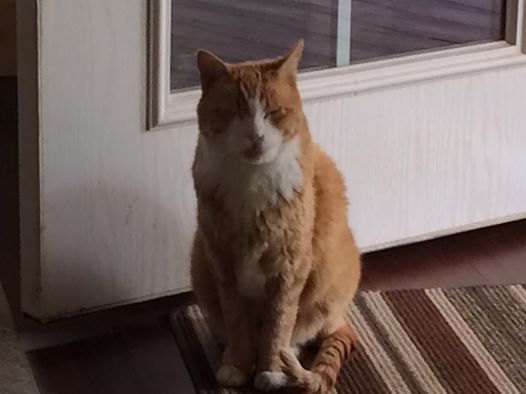
I lost my cat. They tell you not to let your cat out of the house when you move for at least two weeks because, as territorial creatures adverse to change, a cat will not understand that the new place is his home and will become hopelessly lost. They also tell you that surrounding him with items from home at the new house will ease the transition.
I brought items from home. I slept with extra t-shirts and towels for several days so they would be infused with my smell and I lined the cat carriers with them. I bought new toys two weeks ahead of time so they would become familiar and I scattered them around the new house. I got Xanax from the vet because our last move with the cats didn’t go that well. Like they tell you, I kept the cats only in the new bedroom at first, allowing them to slowly acclimate to a limited territory. I plugged in a very expensive diffuser of cat-friendly hormones as I tossed around the new toys. I stayed with the cats, sitting in the bedroom with them for 20 hours to help ease their anxiety.
I was fully prepared to keep the cats indoors for two weeks, although I thought it might kill me. My cats were outdoor cats, trotting off each day after breakfast to enjoy their wild territory, trotting back in at 5 for dinner every night. Despite the pheromones and the drugs and the smelly t-shirts and the toys and my company, my cats weren’t adjusting well. They howled all night long. They traded off, one getting quiet for a while just as the other picked it up. Cat howls are impossible to ignore or to sleep through.
The next day, they were mostly relaxed and quiet and snoozed in their comfy crates. By dark, they wound themselves up again to howl all night a second time.
I love my cats. I am sentimental and hopeless in my love for my animals. But I thought about killing them. I thought about giving them away or putting them to sleep. I thought about a lot of ugly, ugly things around 3 am that second night, ruefully grateful that I did not have a colicy infant on my hands.
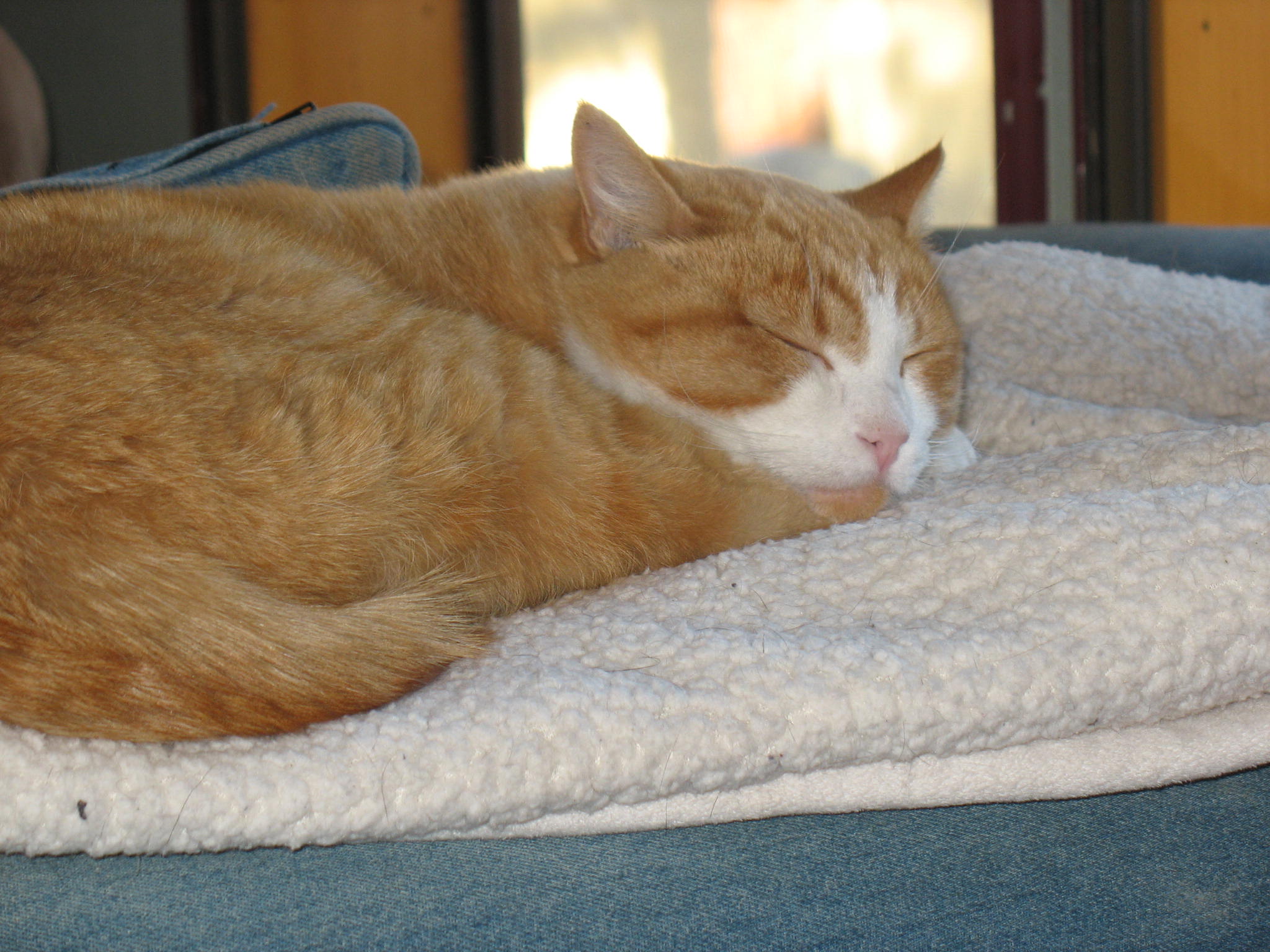
The second morning, I arose around 5, in the dark. There was no point to the whole bed thing. I opened the front door to put an unwanted rug out on the stoop. My husband made an inarticulate noise behind me and my boy cat Max shot out the door. Into the pitch dark. As I recoiled in horror, his sister Lily launched herself at the closed screen door and popped it open, running out into the yard. Lily took one look around and came zooming back to the door, meowing wildly to get back in. I have not seen Max again.
Fast forward. As I write this, it is 37 days since I lost Max. I have learned more about lost cats than I knew was possible to learn. There are several websites and a very friendly chat group devoted to the behavior of cats when they are lost and tips for recovering them. It turns out most cats will not set out to make an Incredible Journey to their old home. Rather, they will immediately find a safe place to hide in their unfamiliar territory and go into super-stealth mode. I read and was told that most cats will hide like this for weeks before they start venturing out again to look for food. Deep in survival mode, overcome with their instincts, they will not come when you call, they will not come to the door, they will not meow and reveal their location, and they may well ignore all the tasty food you can offer. I read and was told stories of cats lost in circumstances like ours who were not seen for weeks and even months and then suddenly reappeared, alive, strong and self-possessed.
So I have not given up on Max, I’ve been doing what they say to do. I bought and borrowed live traps and set them in likely locations filled with tuna. I spoke to my new neighbors, even the ones with the shuttered windows, no mailbox and no front door. I hung my dirty clothes around the edges of the property to give it the smell of home. When the traps were untouched (not even a raccoon???), I gave up and set up a feeding station and purchased an infrared motion-activated game camera to watch over it. I searched in my neighbors’ barns and sheds and in the woods in back. I kept refreshing the dirty laundry and put out fresh tuna every night. No one ate the food I set out (not even a raccoon???) and no one appeared on my game camera, except for my dog and one magpie.
And I cried. I sobbed so hard I thought I might be sick. Often. If you have lost pets, and if you are in the least bit sentimental about them, you know the keen, eviscerating pain of their absence. The bowl you’re not filling at dinner time, the special spot that is not being sat in. The particular gesture and facial expression you are not seeing.
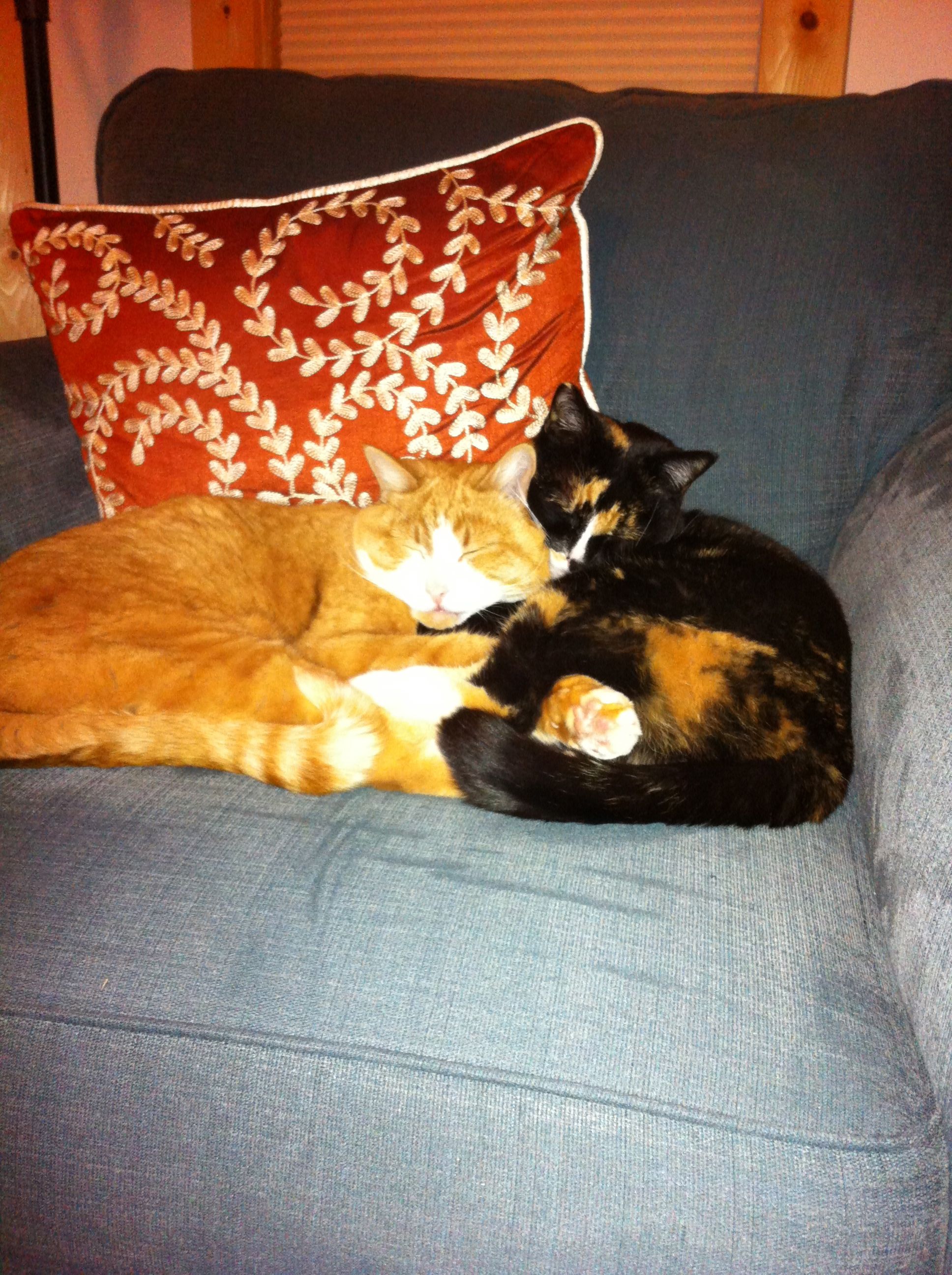
The loss of Max coincided with the devastating loss of my home and the two were almost more than I could bear. Organs vital to my existence had been torn away and, maybe worst of all, it was all my fault. I moved us from home and I failed Max. My husband feared for my mental health. I did, too, but I was too busy hanging up dirty laundry and crying to care very much.
After four weeks, I had seen nothing to indicate that Max was nearby. I was running out of things to do. Don’t give up, my chat room people said, lots of people don’t see their cats for months and then they show up. Keep trying, they said.
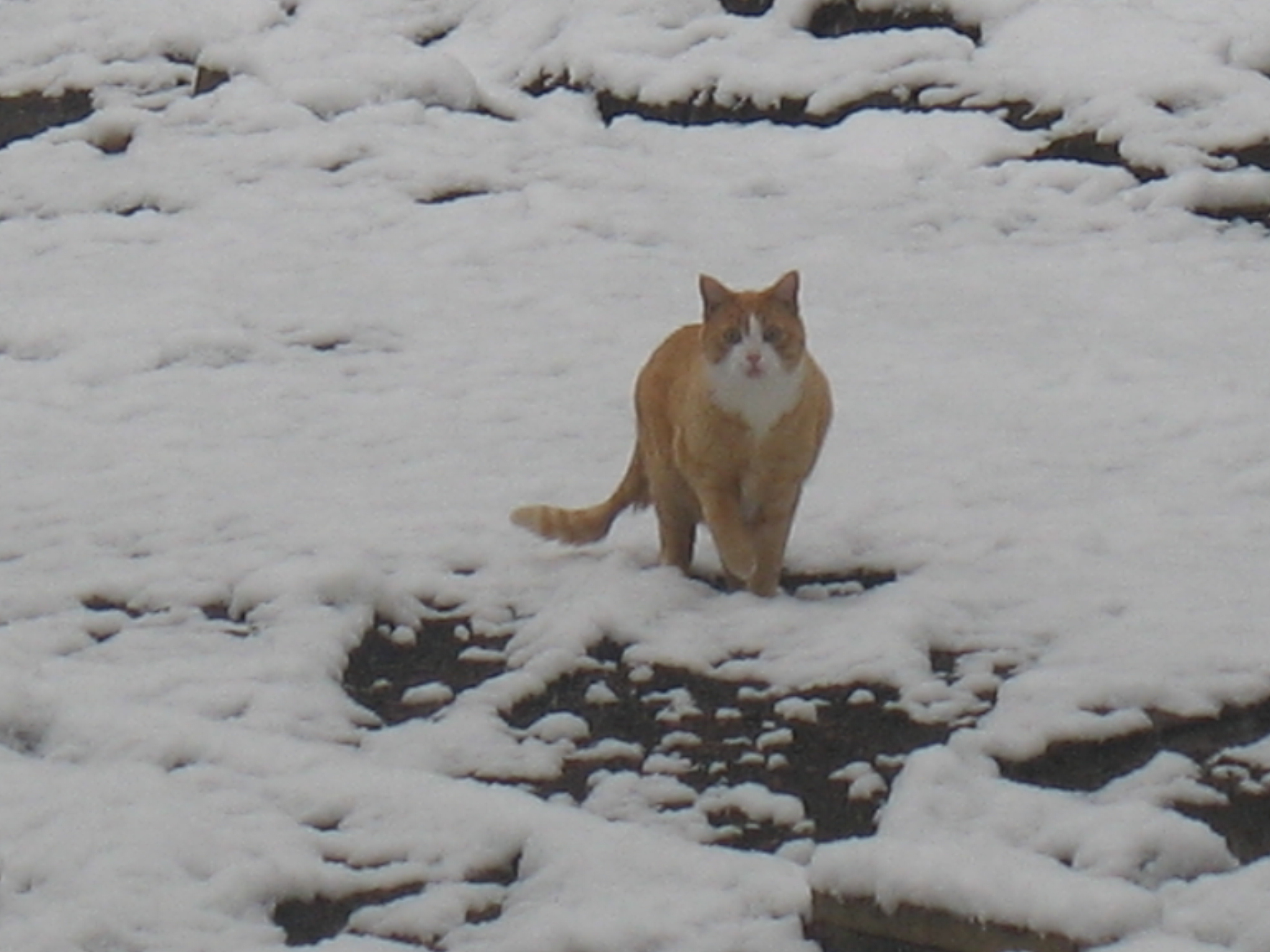
Then it snowed. Just a little dusting. I was sitting dully with my morning tea, empty eyes fixed on the window when I thought about tracks. Tell-tale footprints in the snow. I’m sorry, I said to my husband, I know you want me to get past this, but I need to try one more thing. I need to look for footprints in the snow. He agreed with me, and in fact he joined me. I texted my neighbors to ask for permission to look for tracks on their properties. My sweet neighbor Margo gave permission and decided to go out and look herself.
I saw some tracks. I saw a few tracks that looked awfully like a cat in a couple of places around the edge of the property. Husband saw a couple promising ones, too. And then we heard from Margo. She texted a photo of a clear line of what could be nothing but cat tracks winding around her house and patio. No other cat had ever appeared in all my doings during the day or to eat my tuna or get its picture taken at night–if these really were cat tracks, they must be Max’s.

We went into action. Margo put out dishes of tuna along the route the tracks took. We bought another game camera and set both up along the route. And we waited. Nothing.
Then the weather came in. More snow and bone-chilling, unrelenting cold. Those tracks haunted me–a solo cat searching for something in the dark. Alone and facing devastating cold. I turned one of the traps into a warm box by tying its door open, wrapping it in a waterproof sheet and filling it with towels and hay. I set this along with more food and the camera near Margo’s door. The snow came. The cold.
Enough snow fell to discourage a small cat from walking very far. It came with the kind of cold that must be able to take his ears or his toes. There have been no new signs of Max for four days.
Don’t give up, the chat room people say. Once some tiny kittens survived in a blizzard. They say a cat survived for more than a year alone in Vermont. Cats are amazing, they say, he can survive.
I wish Max had been run over or eaten by a coyote. Actually, I wish he was here with me right now, putting one of his arms across mine to make it hard to type, eyes mostly closed as the fire pops. But if I knew he were dead, at least I would be able to mourn him and stop worrying and strategizing. As it is, I cannot shake the image of him out there, stressed and cold and hungry. Alone for the first time in his life. I can’t stop wracking my brain for what else to do to help him survive and bring him back home. I can’t stop abusing myself for failing to protect him and failing to rescue him. For thinking such hateful thoughts about him hours before he disappeared.
They say I should hope, they say it will all work out. Keep trying. But don’t obsess, says Husband, don’t be so hard on yourself. I listen and I try to do what they say. Surely some day I will know where he is or I will figure out how to give up. Some day I’ll feel at home again and Max may be with me, or not. But that’s not today.

 On Elk Meadow Road